

Verbier
VALAIS, SWITZERLAND
I recently went to Verbier, in the Valais canton of French-speaking Switzerland, to hike to a 100-year-old mountain refuge called Cabane Mont Fort.

My guide was Marie, one of just two female mountain leaders in Verbier.
We met at Le Marlénaz restaurant on the north side of Verbier and started our hike by joining the Bisse de Levron. Bisses are water channels common to Valais, Switzerland’s driest region, and they are also popular hiking paths.
Marie gesticulated to the gambolling clouds in the distance. “When winds come from the west, they tend to bring rain clouds with them. We mustn’t lose time.”
As we walked, we enjoyed open views of the valley expanse and snow-capped mountains beyond and then we dipped into the shade of ancient pine trees.
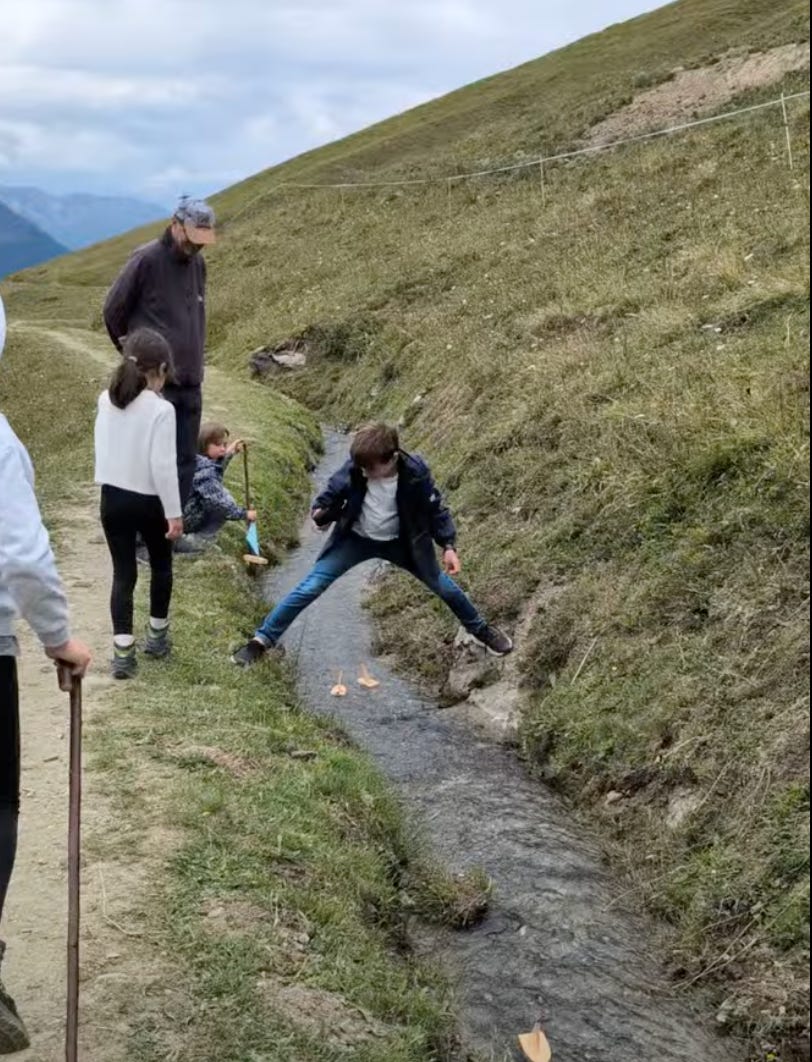
We passed a Swiss family with young kids who were racing tiny wooden sail boats in the bisse, pushing them gently with sticks when they capsized to set them right them again.
Marie stopped and cocked her head towards a whistling sound. “Marmottes” she whispered. “If we’re quiet, we’ll see one.”
I didn’t like to tell her that I’ve long been victim to a safari curse.
I’ve seen footprints, fresh faeces, leaves dancing in the wake of an elusive beast. I’ve heard the call of many a wild animal in different continents, but I never SEE anything.
True to form, the marmottes did not appear. “They’re probably at the golf course,” Marie said, unfussed. “They love lying on the greens and catching the afternoon sun.”
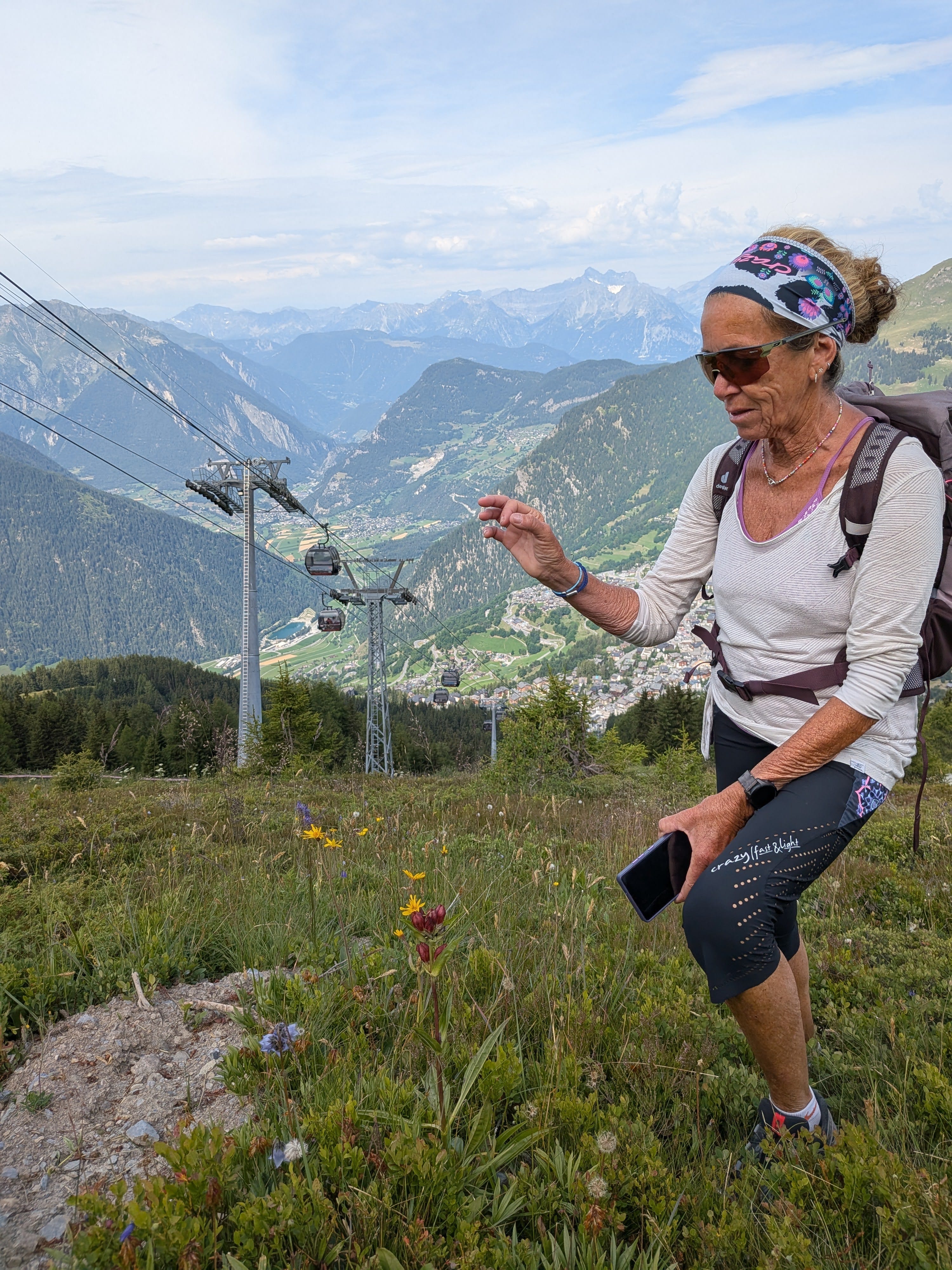
It was high season for petal peepers; from bell flowers and blade campion to common shamrock, arnica montana, heather, blueberries and achilles millefeuille, it was a colourful and idyllic walk.
Cabane Mont Fort’s Swiss flag was eventually visible above us and we paused to recover before the final ascent.


Marie straddled the bisse, bending double and scooping the cold water to splash on her face; I followed suit and enjoyed the icy cool on my hot cheeks.
The cabane was built in the summer of 1925 to provide shelter to the early pioneers of alpinism.
Although accommodation was free, it was tradition that visitors would ‘pay’ for their lodging with delivery of a hunk of wood for the fire, or some fresh food for the guardian and his family.
As we made our final climb to the door, we discussed expectations.
I wondered if the sense of relief will be as strong for us after a three-hour hike as it was for the hut’s early visitors who had hiked many more hours to get here.
I wondered if the food would taste as good as it did in the 1900s, knowing that it’s now brought by van on a bumpy path.
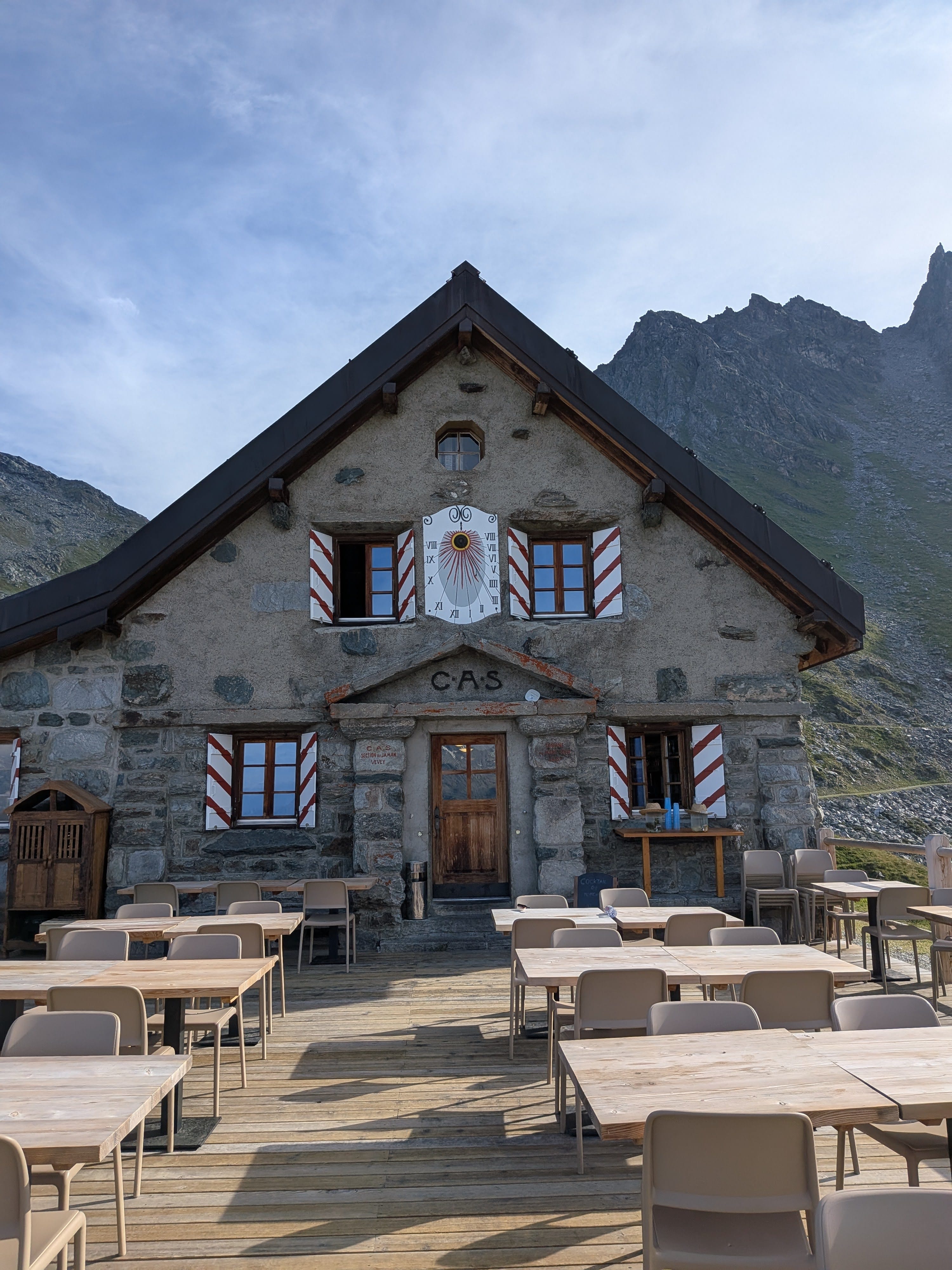
Even as late as the 1980s, Daniel Bruchez, the hut’s longest-serving guardian, was bringing bread, fondues, salad and even Bolognese sauce to the hut on skis.
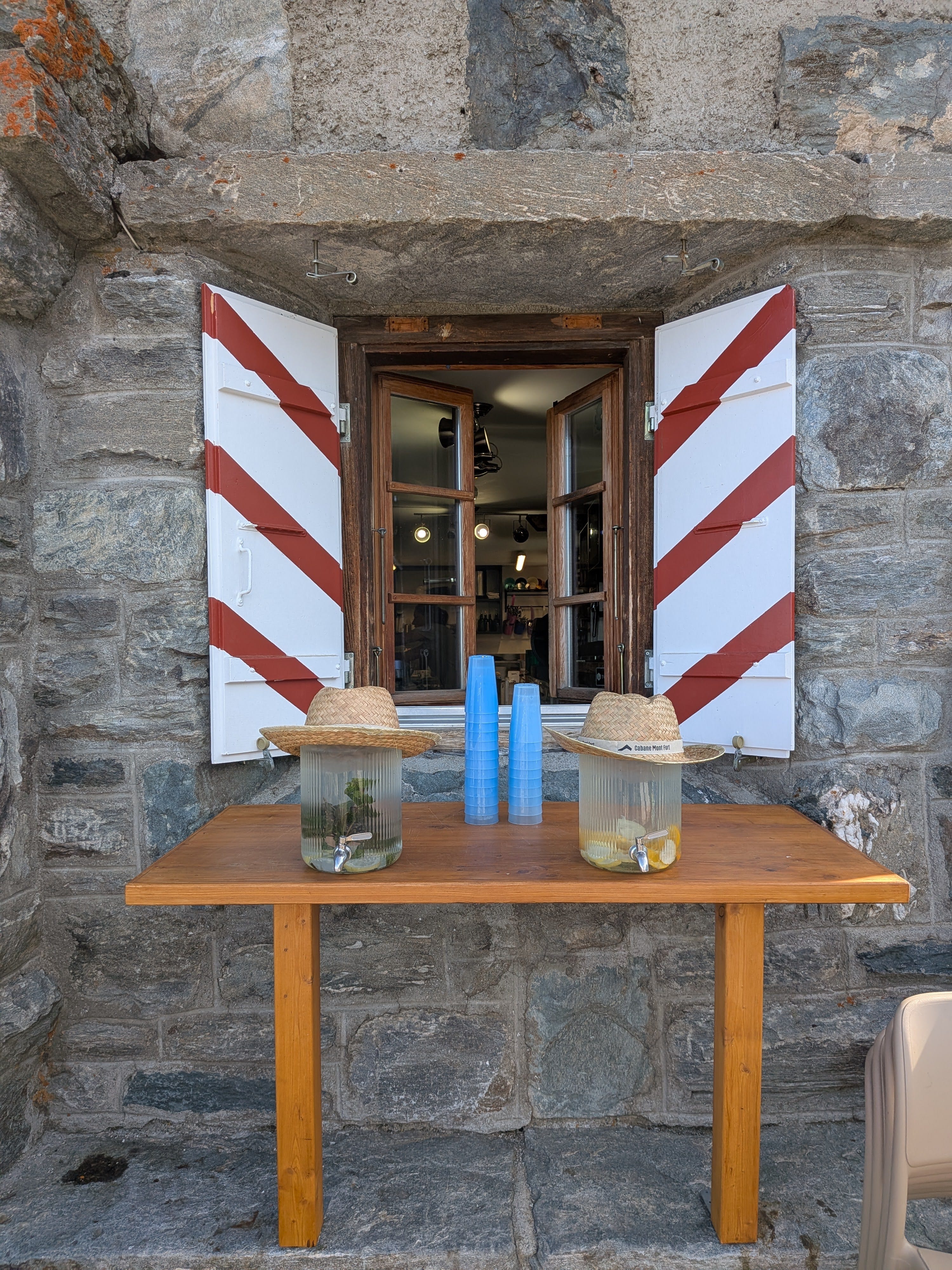
I meant to go up to my room and freshen up but quickly found that, in among all the stories of dering-do among guests who come from a mix of NZ, US, Scotland, Ireland and Germany, and the lure of a cold beer on the big wooden terrace, time sped by to dinner time.
We dined together on food that wouldn’t be out of place in town never mind up here in splendid isolation.
A starter of gazpacho and salad was followed by a hearty polenta and cheese dish and then a slab of chocolate brownie that I stashed in my pocket for the descent the next day.
Dawn broke a bluebird day, and after a hearty breakfast, I said farewell to Mont Fort and Marie.
I was keen to descend back to Verbier via the golf course to see if I could spot a few marmottes and exorcise that safari curse once and for all.
This piece feels like a postcard in the best sense—simple on the surface, but full of little human textures that stay with you. I love how the hike isn’t just scenery (though the images of bisses and pine shade are gorgeous), but also small encounters: the kids shepherding their toy boats, Marie splashing her face, your ongoing feud with marmottes.
There’s a gentle humor here that works—especially the “safari curse”—and the contrast between the hut’s old traditions and the modern comforts made me grin. It’s wild to think of guardians skiing up with Bolognese sauce just a few decades ago.
You managed to bottle something I really appreciate in travel writing: a sense of quiet wonder without trying to force epiphany. It reads like the kind of place you only understand by walking to it.
Dave. This is such a lovely comment to nearly round off the year with. Merci merci!